Tag Archives: PowerShell

Agentless with Jordan Borean

Posted on by .
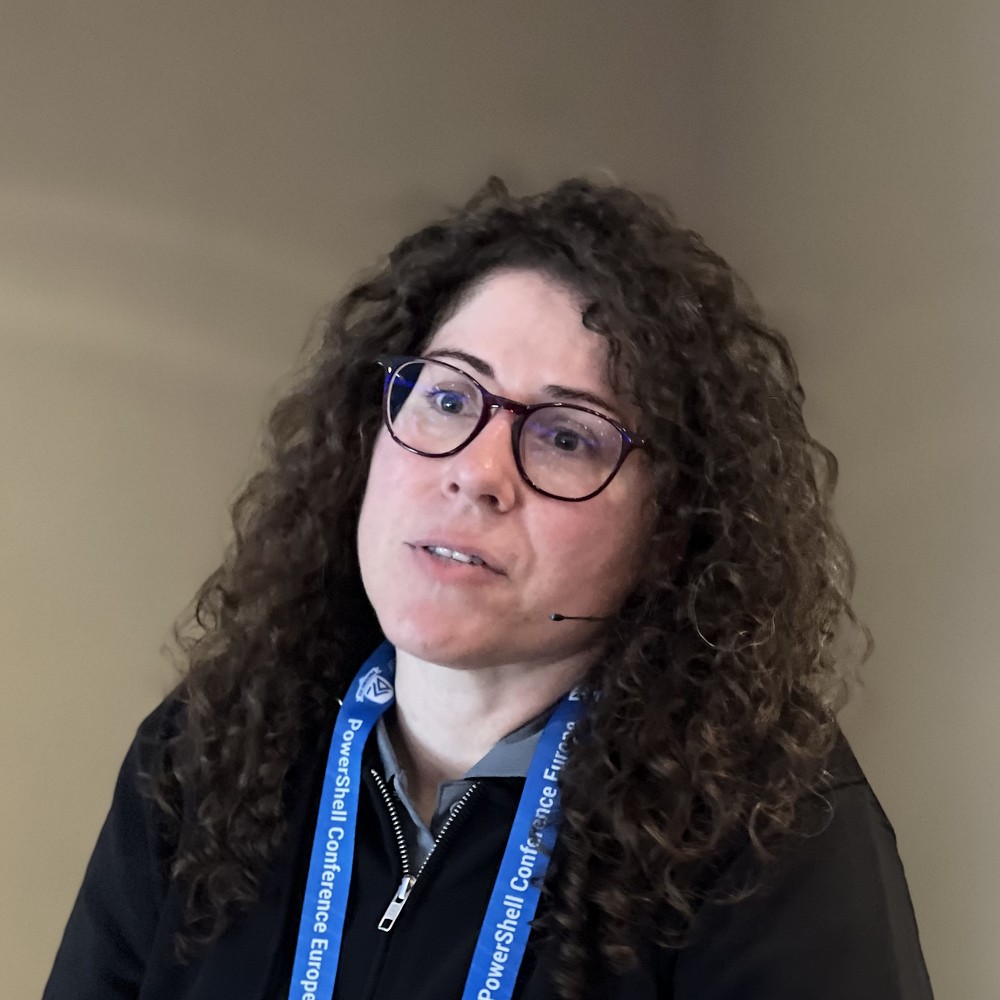
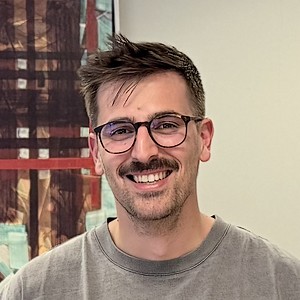
Jordan Borean in Wiesbaden during PSConfEU 2026

Jordan Borean works as a senior software engineer at Red Hat in Brisbane, playing a key role in developing the Ansible core, where the Windows integration is largely his work. The somewhat ambiguous title term “agentless” not only describes a key feature of the Ansible software, but it also serves as a metaphor for my guest’s unique career.

Jordan grew up entirely inside the Microsoft ecosystem: Windows XP through 7, even a Windows phone. He studied IT, disliked programming, and became a sysadmin at an Australian bank running IIS, MS SQL Server and .NET. Ansible arrived only because the team wanted to stop hand-raising servers like pets.

As usual, we talk a lot about our personal history in IT. Our conversation turns from PowerShell to Bash, from curl and jq to awk and sed, from PowerShell’s object pipeline to the impact that AI tools have nowadays.

We cover Ansible’s relationship with Windows features such as DSC, idempotency, extension models, and the limits of using Ansible in Windows-heavy environments. Jordan also shares his current focus on improving developer experience, debugging support, Windows integrations, and performance. We close on .NET and C#, and his advice for anyone starting out: don’t follow the guide, find out why it works.

The interview was recorded on June 4th, 2026 in Wiesbaden (Germany).

RSS feed: AAC | MP3
Direct download: AAC MP3

Show notes

  • Jordan on his blog: bloggingforlogging.com
  • Jordan on GitHub (jborean93)
  • Jordan’s author page at Red Hat (redhat.com)
  • Jordan: Writing your own Ansible PowerShell Module, PSConfEU 2024 (YT)
  • Jordan on The PowerShell Podcast, Ep. 101: From Python to PowerShell (pdq.com)
  • ansible.windows collection releases (GitHub)
  • Windows 95 (WP)
  • Brisbane (WP)
  • Apache Groovy (WP)
  • Test-driven development (WP)
  • “Pets vs. Cattle” — coined by Bill Baker (Microsoft), popularised by Randy Bias (link to add)
  • WS-Management / WinRM (WP)
  • Python (WP)
  • The PowerShell Discord (current invite link to add)
  • PowerShell Conference EU (psconf.eu)
  • Windows Phone (WP)
  • Ubuntu (ubuntu.com), Arch Linux (archlinux.org), Fedora (fedoraproject.org), openSUSE (opensuse.org), RHEL (redhat.com), Debian (debian.org)
  • How is SUSE pronounced?
    “The name S.u.S.E. was an acronym for “Software- und System-Entwicklung” (Software and Systems Development)” (WP)
    Suse originally comes from Nürnberg/Nuremberg, Germany. For this reason, German speakers typically base their pronunciation on the full German title.
  • GCC (gcc.gnu.org) and Bash (WP)
  • Darwin, the BSD-derived core of macOS (WP)
  • LibreOffice (libreoffice.org)
  • GNOME (WP) and Miguel de Icaza (WP)
  • KDE (WP) and SUSE (WP)
  • Wayland (WP) vs. X11 (WP)
  • Tiling window managers: i3 (i3wm.org), Sway (swaywm.org), Hyprland (hypr.land)
  • RPM (WP), dpkg/APT (WP), WinGet (WP) — see also SLW18 with Keivan Beigi and SLW20 with Demitrius Nelon
  • Flatpak (flatpak.org), Snap (snapcraft.io), AppImage (appimage.org)
  • systemd vs. SysV init (WP)
  • Editor war: vi/Vim vs. Emacs (WP)
  • Atom, and how it became Visual Studio Code (WP)
  • Zed, the Rust-based editor (zed.dev) — confirm this is the one you meant
  • PSReadLine (GitHub) and the fish shell (fishshell.com)
  • curl (curl.se) and jq (jqlang.org)
  • FFmpeg (ffmpeg.org)
  • Android is built on the Linux kernel (WP)
  • Solaris (WP), AIX (WP) and Sun Microsystems (WP)
  • Chaos Computer Club (ccc.de)
  • Red Hat, headquartered in Raleigh, North Carolina (WP) — IBM’s acquisition closed in July 2019
  • Atlassian, founded in Sydney (WP)
  • MIT License (WP) vs. GNU GPL (WP)
  • FreeBSD (freebsd.org), OpenBSD (openbsd.org), NetBSD (netbsd.org)
  • The USL v. BSDi lawsuit that slowed BSD down (WP)
  • Netflix serves video from FreeBSD (WP)
  • The name “Ansible”: coined by Ursula K. Le Guin (WP) in her 1966 novel Rocannon’s World for a device allowing instantaneous communication across interstellar distances; she said she derived it from “answerable” (WP). Orson Scott Card borrowed the word for Ender’s Game, where an ansible controls a fleet of distant ships — and that is the image Michael DeHaan took the name from (opensource.com)
  • Michael DeHaan (WP), who before Ansible wrote Cobbler and co-wrote Func at Red Hat — the tools Jordan couldn’t name in the interview
  • Ansible (ansible.com, WP) — first released February 2012, acquired by Red Hat in October 2015
  • IRC (WP) and Matrix (matrix.org)
  • YAML (WP)
  • Puppet (WP), Chef (WP), SaltStack (WP), Terraform (WP)
  • Group Policy (WP) and its client-side extensions
  • Desired State Configuration (WP), MOF (WP), the Local Configuration Manager, and DSC 3 (GitHub) — see also SLW12 with Steve Lee and SLW15 with Gael Colas
  • Idempotence (WP)
  • WSL (WP)
  • Debug Adapter Protocol (microsoft.github.io) and Language Server Protocol (microsoft.github.io)
  • Jordan’s Ansible debugger proof of concept (GitHub)
  • C# (WP), F# (WP), .NET (WP)
  • Mono, de Icaza’s .NET for Linux (WP)
  • Rust (rust-lang.org) and Go (go.dev)
  • Mark-André Moreau, Devolutions (devolutions.net)
  • “Developers, developers, developers” (WP)

Chapters

00:00:00.000 Intro
00:00:30.719 Roots in Computers
00:02:20.792 From Bank Sysadmin to Ansible
00:06:35.250 PowerShell Enters the Picture
00:08:59.934 Windows, Linux, and Mac
00:13:11.091 Fedora, Desktop, and Choice
00:17:44.075 Linux Fragmentation Debate
00:22:34.591 Editors, VS Code, and AI
00:25:42.487 PowerShell on Linux
00:28:50.808 Curl, JQ, and AI Help
00:31:38.829 Linux Dominates Infrastructure
00:35:47.403 Red Hat and Open Source
00:39:24.742 Open Source License Views
00:41:09.813 Linux Beats BSD?
00:43:01.950 How Ansible Began
00:47:26.332 What Ansible Actually Does
00:53:24.508 Ansible Versus Windows DSC
01:04:06.645 Future of Ansible
01:05:56.529 Developer Experience Matters
01:07:44.593 Idempotence in Practice
01:12:42.446 Why .NET Matters
01:16:52.681 Curiosity and Learning

Transcript

You can find an auto-generated transcript of this episode here:
HTML | PDF

Music

SLW 24: Dev + Ops mit Jan-Hendrik Peters

Posted on by .
Jan-Hendrik Peters während des Interview. 30.Dezember 2025 in Duisburg.

Jan-Hendrik Peters ist Informatiker mit einer hohen Affinität zu Linux und einer stark Microsoft gefärbten beruflichen Laufbahn. Er ist einer der Entwickler/Maintainer des PowerShell-Moduls AutomatedLab und ein gern und häufig gesehener Sprecher auf Konferenzen.

Ich sprach mit Jan-Hendrik über seine beruflichen Stationen, die ihn von einem Lebensmittelhändler zu Microsoft führten, und von dort zu einem regionalen Energievorsorger.

Wir streifen in unserem Gespräch viele Themen. Ich war versucht, die Epsiode “Karriereberatung” zu benennen. Letztlich sind wir auf der Suche nach der “modernen IT”, wir streifen zahllose Buzzwords (minütlich grüßt das inhaltsleere “Cloud”) und skizzieren den IT-Mitarbeiter , den es braucht, um ein Stückchen mehr digitale Souverintät zu erlangen.

Jan-Hendrik berichtet von seiner Ausbildungszeit als Fachinformatiker, seiner Freude am Programmieren und den Vorteilen, Konfigurationen als Code zu schreiben und . Am Ende zeigt sich, dass die Abkehr von den Silos, in der sich IT-Abteilungen heute oftmals befinden, eine der zentralen Aufgaben für die Zukunft sein wird. Und eines noch: Der DevOps-Pionier, den Jan-Hendrik persönlich bei denDevOpsDays in Singapur in 2017 traf und deren Namen er nicht parat hatte, heißt Andrew Clay Shafer.

Das Interview wurde am 30. Dezember 2025 in Duisburg aufgezeichnet.

RSS-Feed: AAC | MP3

Direkter Download: AAC MP3

Randnotizen

Kapitel

00:00:00:00 Intro (Wildflower by Scott Buckly)
00:00:01:14 Hallo Jan-Hendrik Peters!
00:00:06:11 CLI vs GUI
00:00:09:34 Der Hersteller als Arbeitgeber
00:00:16:01 Cloud
00:00:19:32 Die Mitarbeiter
00:00:27:36 Container
00:00:39:51 Automated Lab
00:00:45:19 DevOps
00:00:54:23 Windows-Restriktionen und Entwicklung
00:00:57:31 Über Silos
00:01:04:11 Configuration Management
00:01:07:20 Digitale Souveränität
00:01:16:06 DSC
00:01:27:22 Karriereberatung
00:01:38:36 Telemetrie und digitale Kontrolle
00:01:43:15 Verabschiedung
00:01:45:58 Outro

Musik

SLW 22: Live in Antwerp with Chrissy LeMaire

Posted on by .
Chrissy LeMaire

In this special episode of the Sliding Windows podcast we broadcast live from the annual PowerShell conference PSConfEU that took place in Antwerp in 2024.
My guest today is one of the best known celebreties of the PowerShell Universe: Chrissy LeMaire, inventor of the DBATools, Manning book author and Github star – to just give a few examples of her highly acclaimed work.

Chrissy comes from a Cajun family in Louisiana (USA), whose French-speaking ancestors still have a special influence on the culture of this region today. Chrissy has lived and worked for many years in Europe now, embracing the the richness of cultures and influences in different countries and regions.

A little different from a regular episode, we talk less about a specific area of expertise. Our main topic is Chrissy’s career from database expert to book author and social media star and her special view on the future of IT. Of course, we also talk about “artificial” and “human intelligence”.

Chrissy shares a pivotal moment in her academic journey inspired by a quote from Paul Dressel, catalyzing a transformation in her approach to learning and paving the way for academic excellence.
Transitioning to Chrissy’s professional narrative, the dialogue navigates towards her engagement with PowerShell projects like DBA tools underscore her ardor for technology and perpetual learning.

A grade is an inadequate report of an inaccurate judgment by a biased and variable judge of the extent to which a student attained an undefined level of mastery of an unknown proportion of an indefinite amount of material.” (Paul Dressel)

The interview was recorded on June 26, 2024 in Antwerp (Belgium).

RSS feed: AAC | MP3
Direct download: AAC MP3

Show notes

Chapters

00:00:07.227 Introducing The Sliding Windows
00:02:39.310 A Journey Through PowerShell
00:03:46.910 European Dreams and Departures
00:06:44.070 Roots and Influences
00:11:48.492 Migration and Family
00:15:19.476 The Rise of DBA Tools
00:22:22.359 GitHub and Microsoft Transformation
00:26:31.059 The Future of DBA Tools
00:31:43.546 Embracing PowerShell and Open Source
00:36:29.979 Exploring GitHub Copilot
00:47:10.223 Delving into AI Engines
00:51:46.884 The Future of Prompt Engineering
00:55:31.873 Exploring Cajun Heritage
00:57:39.787 Testing French Knowledge
01:00:49.559 Unveiling the Monad Manifesto
01:01:44.759 Owls to Athens

SLW 20: WinGet with Demitrius Nelon

Posted on by .
Demitrius Nelon

My guest today is Demitrius Nelon who joined Microsoft in 2019. He is responsible for the Package Manager for Windows, better known as WinGet.

Demetrius talks about his personal background and career journey, mentioning his service in the U.S. Navy and his work at various technology companies, including Microsoft, VMware, and Amazon.

Prior to the employment of Demitrius Microsoft started to work on a Package Manager, primarily targeted on developers. They were inspired by the software of an independent developer from Canada named Keivan Beigi. His AppGet tool led Microsoft on the path to their own implementation. Keivan was a guest on the Sliding Windows in episode 18.

Initially named AppInstallerCLI, due to its positioning under the umbrella of Microsofts sideloading application named AppInstaller, Scott Hanselmann recommended to change the name to WinGet which became popular fast.

WinGet was initially (also) considered for use on servers but was only deployed on Windows Desktop due to evolving business requirements. Today, many admins complain that WinGet is not available everywhere.

Compared to Chocolaty WinGet eliminates arbitrary code by using a declarative syntax called a manifest.
Demitrius discusses the security precautions taken to ensure the safety of the manifests and the considerations for vendors hosting the manifest and installer without independent verification.

This episode provides in-depth insights in the development of WinGet so far, its inner struggles and the many visions of the developing team. Of course, we also discuss the necessity of PowerShell cmdlets, the integration of native commands utilizing argument completers and the long wishlist of the Microsoft’s customers embracing such an overdue, long awaited tool.

The interview was recorded in Prague on June 22, 2023.

RSS feed: AAC | MP3

Direct download: AAC | MP3

Show Notes

Chapters

00:00:00 Intro (This Is Who I Am by Rewob)
00:01:15 about Demitrius Nelon
00:04:57 The Evolution of Windows Package Manager aka WinGet
00:09:11 Winget’s Potential
00:11:12 Winget Internals
00:14:30 Manifest Creation and Vendor Adoption Challenges
00:34:51 Windows Store, Acceptance, Recognition, Security boundaries
00:41:13 Efforts to bootstrap Winget on Windows Server
00:45:10 Community-built tools like Winget UI
00:52:14 A Linux-like tool for Windows
00:54:51 WinGet and PowerShell
01:06:43 Configuration as Code and Desired State Configuration
01:12:48 WinGet, Linux, WSL: Better together?
01:15:49 Outlook: Employees, Community, future Features
01:21:20 Farewall/Outro http://dig.ccmixter.org/files/rewob/66100

Bonus content

Music

Rewob: This Is Who I Am

SLW 19: VSCode with Justin Grote

Posted on by .

When Microsoft acquired GitHub.com in 2018, no one could doubt that there is a deep cultural change going on in Redmond, Washington. A few years earlier, in 2015, Microsoft began to invest in a  new text editor that can simply be described like this:
“One editor to rule them all”

VSCode and GitHub quickly started their journey as a congenial couple, conquering the hearts of the users – many of whom were not previously Microsoft devotees.

Justin Grote is one of those very gifted IT pros who have embraced Microsoft’s new course with open arms. A man of many talents – and his greatest may be that he willingly shares his knowledge with the community. I met Justin during the PSConfEU 2022 in Vienna and of course we did not only talk about VSCode .. Listen yourself!

The interview was recorded on June 23, 2022 in Vienna.

RSS feed: AAC | MP3

Direct download: AAC | MP3

Show notes

Chapters

00:00:00.000 Intro/Whoami,
00:03:07.680 Exposed to computing
00:10:03.317 From Mac to Windows
00:16:01.100 Becoming
00:21:38.267 The glue
00:35:57.579 A cultural shift,
00:53:11.385 VSCode
01:01:53.372 Tips and tricks for VSCode
01:27:48.516 From files to workspace
01:36:13.347 Console
01:43:14.374 Epilog

Music

Extan ft Farisha: I Want To Live

SLW 18: A package manager for Windows with Keivan Beigi

Posted on by .

When Microsoft announced a “Windows Package Manager” (better known as WinGet) in the context of the Build conference in 2020, hardly anyone suspected that this overdue, long-desired tool was not a “Microsoft original”. 

A Canadian programmer, my today’s guest Keivan Beigi, had developed a package manager called “AppGet” a few years earlier and made it available under an open source license. When Microsoft employees contacted him one fine day, what belonged together seemed to come together. But then the story took its own course. When Microsoft finally published the first preview of WinGet six months later, it was all too obvious that they  simply copied AppGet – without giving credit, which caused loud criticism. 

I talk to Keivan about the background of his technology, package management in general and Microsoft’s fickle strategy towards its own community.

In the bonus section, you’ll find a reference, a little salute to the colleagues of Windows Weekly, Paul Thurrott and Mary Joe Foley, whom we both admire, and who played a significant role in making Keivan “famous” from one day to the next.

The interview was recorded on December 20, 2021 in Vancouver and Duisburg.

RSS feed: AAC | MP3

Direct download: AAC | MP3

Show notes

Chapters

00:00:00.001 Intro: Bluenotes by Airtone
00:01:20.382 Welcome
00:02:18.802 Keivan’s beginnings
00:09:52.663 Stuck with Windows
00:14:59.809 The missing package management
00:28:39.052 Rocket science
00:31:14.582 From AppGet to WinGet
00:41:33.521 Conspirancy theories
00:45:10.348 WinGet vs AppGet
00:48:51.328 The vendor vs the community
00:51:47.876 WinGet++
00:58:57.169 Package formats
01:05:55.381 Predeictions
01:08:28.942 No regrets
01:12:18.061 Hot reload
01:16:13.781 Competing languages
01:22:30.785 Wrap-up
01:24:41.144 Bonus:Off the records

Music

Airtone: Bluenotes

SLW 15: DSC with Gael Colas

Posted on by .

Gael Colas is an independent consultant and vital member of the DSC Community (https://dsccommunity.org), an association who actively contributes to the development of the name-giving Configuration Management framework.

Desired State Configuration (DSC) was introduced with PowerShell 4 as an addition to the Windows PowerShell and has undergone some significant changes ever since. I invited Gael to chat about the roots, the principles and the future of DSC – not only for the Windows platform.

The interview was recorded on July 15, 2020 in Kuala Lumpur and Duisburg.

RSS feed: AAC | MP3

Direct download: AAC | MP3

Show notes

Chapters

  1. 00:00:00.000 Intro (Admiral Bob: Wanderer, Take 2)
  2. 00:02:31.396 about_Gael
  3. 00:07:31.506 DSC early days
  4. 00:10:02.050 Configuration management
  5. 00:12:35.465 Idempotency et al
  6. 00:18:59.571 DSL
  7. 00:22:39.457 DSC ressources
  8. 00:26:09.837 LCM
  9. 00:28:03.786 Pull server
  10. 00:36:01.196 Toolmakers
  11. 00:46:54.780 DSC in mixed environments
  12. 00:54:40.467 Classes in DSC
  13. 00:58:26.173 DSC and PS7
  14. 01:04:59.300 Forecast
  15. 01:19:04.528 Wrap-up
  16. 01:33:09.517 Outtro

Music

SLW12: PowerShell 7 with Steve Lee

Posted on by .

Steve Lee, Principal Software Engineer Manager for the PowerShell Team, started his career as developer on the “Internet Explorer for UNIX” team in Redmond. Later on he focussed on (remoting) technologies such as WMI/CIM, WinRM/OMI and SSH until he finally took the role of a leading manager on the PowerShell team. 

Steve provides deep insights on the cultural change at Microsoft and the impact on the ecosystem PowerShell. Finally we stare into the chrystall ball to find out what’s beyond the current state of the implementation.

The interview was recorded on June 7, 2019 in Hannover.

RSS feed: AAC | MP3

Direct download: AAC | MP3

Show notes

Chapters

  1. 00:00:00.000 Intro (Bluemillenium: Temperate transition)
  2. 00:00:43.779 about_Steve
  3. 00:05:30.150 From WMI to CIM
  4. 00:13:49.779 CIM
  5. 00:24:02.275 OMI
  6. 00:30:14.015 From OMI to SSH
  7. 00:35:17.420 The Linux Challenge
  8. 00:43:31.397 Open sourcing
  9. 00:53:53.680 From Windows PowerShell to PowerShell 7
  10. 01:06:05.394 RSAT++
  11. 01:16:40.895 The boss enemy
  12. 01:20:55.092 Forecast
  13. 01:30:16.976 One more thing

Music